
Home
/
Services
/

Trusted by founders and incubator-backed teams
Best Next.js Platform Engineering in Charleston
Zenveus builds and improves Next.js platforms where rendering strategy, product performance, API design, authentication, caching, and deployment reliability matter as much as polished screens.
What is Next.js platform engineering?
Next.js platform engineering is the work of designing a React-based product foundation around routing, rendering, data fetching, caching, APIs, authentication, analytics, and deployment. Zenveus uses Next.js when the product needs speed, SEO, maintainability, and production control.
Who is this for?
- SaaS founders building their core platform on Next.js or migrating to it
- Teams with AI-generated Next.js codebases that are breaking under real traffic
- Venture-backed startups preparing for Series A technical due diligence
- CTOs who need senior Next.js engineering capacity without the hiring overhead
- Agencies building Next.js platforms for enterprise or high-growth clients
- Companies replacing legacy web platforms with modern, edge-ready architecture
Why teams choose Zenveus for Next.js Platform Engineering
Senior Next.js architects only, no junior engineers on production platforms
AI-assisted delivery with architectural governance from day one
Rendering strategy expertise: SSR, SSG, ISR, RSC, and edge middleware
API design, caching architecture, and database query optimization included
50+ production Next.js platforms shipped across SaaS, commerce, and fintech
Lighthouse performance targets, Core Web Vitals, and accessibility built in
Tools and stacks we work across
Next.js 14+
React / TypeScript
Node.js
Supabase / PostgreSQL
Prisma / Drizzle
Tailwind CSS
Vercel / AWS
Cloudflare Edge
Stripe
OpenAI SDK
How the engagement works
Step 1
Technical Forensic Call (24–48h)
Step 2
Platform Architecture Blueprint
Step 3
Rendering Strategy + Data Layer Design
Step 4
AI-Accelerated Sprints + Weekly Demos
Step 5
Production Launch + Performance Validation
Transparent Pricing Ranges & Realistic Timelines
Dedicated Senior Developer
$4,500 / month
Pricing
Onboard in 4–7 days
Timeline
Managed Engineering Pod
Scoped after review
Pricing
Onboard in 3–7 days
Timeline
Next.js Platform Engineering VS AI-Generated Codebases
Zenveus maps each page to the right pattern: SSR for personalized or frequently changing views, SSG for stable content, ISR for semi-static pages, and client rendering only where interaction needs it. That prevents slow pages and fragile frontend complexity.
Aspect
AI-Generated Next.js Code
Zenveus Platform Engineering
- Speed to Launch
- Initial Cost
- Scalability
- Customization
- Performance
- Ownership
- Best For
- Fast scaffold, brittle under load
- Default patterns, unoptimized
- Breaks past early user volumes
- Flat, no architectural strategy
- Near-zero: generated on demand
- Fragmented, hard to maintain
- Demos and early prototypes
- Production-ready from the first deploy
- Rendering strategy matched to product needs
- Designed for 100k+ concurrent users
- Edge-ready, API-first, elastic
- Production test pyramid from the start
- Clean, documented, maintainable codebase
- Commercial platforms and institutional-scale products
- When AI-generated Next.js is acceptable?
- 1. Early idea validation with no real users
- 2. Internal tools or dashboards with low traffic
- 3. Short-lived experiments or proof-of-concepts
- 4. Pre-revenue products where architecture is not yet critical
- When Next.js Platform Engineering is the right choice?
- 1. Building a commercial Next.js platform for real users
- 2. Scaling beyond early traction and needing production architecture
- 3. Preparing for fundraising or enterprise client technical review
- 4. Long-term product roadmap requiring maintained, extensible code
Some Of Our Recent Work

AI & automationVehicle photos transformed into consistent listing assets without studio shoots
Turned ordinary on-lot photos into branded studio-quality listing assets without editors, photographers, or studio sh…
Read the case study →
SaaS & platformOne multi-site CMS replaced fragmented client website operations
Delivered a production-ready multi-site CMS with performance, SEO, migration, admin UX, environment, data workflow, a…
Read the case study →
SaaS & platformA fragmented wellness library turned into a connected subscription knowledge platform
Created one connected discovery experience across oils, ailments, recipes, body systems, emotions, profile context, a…
Read the case study →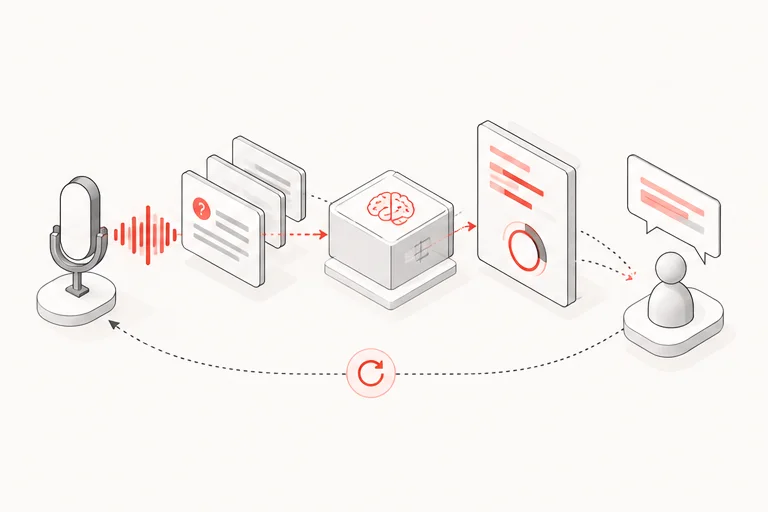
AI & automationVoice AI coaching made interview preparation 75% more efficient
Helped users prepare 75% more efficiently while improving confidence, response quality, and consistency of practice.
Read the case study →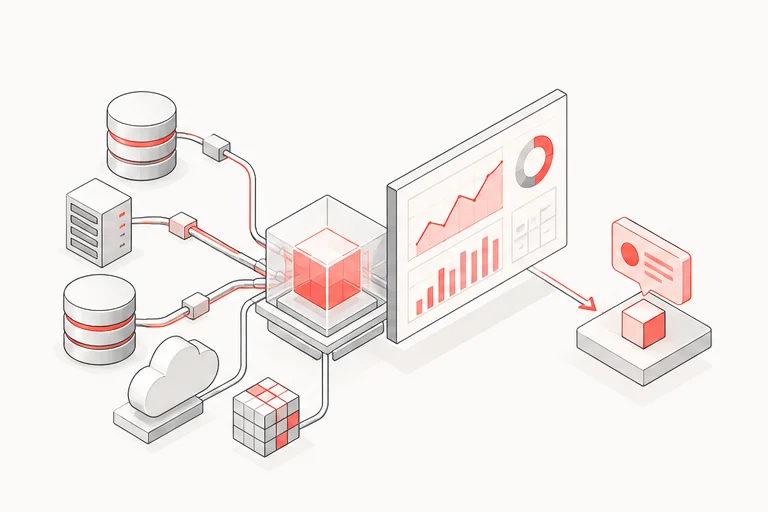
AI & automationEnterprise analytics inside the customer cloud — answers to dashboards in under 60 seconds
Turns natural-language questions into live dashboards in under 60 seconds and deploys inside the customer's AWS accou…
Read the case study →
AI & automationAI sales automation rebuilt for reliability — 80+ qualified leads a day
Scaled from 30-50 to 80+ leads/day, cut invalid records reaching AI to 0%, detected failures in under 30 seconds, and…
Read the case study →Frequently Asked Questions
Can Zenveus migrate a React app to Next.js?
Yes. Zenveus can plan incremental migrations, preserve critical routes, and move high-value pages first instead of forcing a risky rewrite.
Does Zenveus work with Vercel and AWS?
Yes. Zenveus can deploy Next.js on Vercel, AWS, or hybrid setups depending on compliance, traffic, cost, and operational needs.
What is Next.js platform engineering?
Next.js platform engineering is the work of designing a React-based product foundation around routing, rendering, data fetching, caching, APIs, authentication, analytics, and deployment. Zenveus uses Next.js when the product needs speed, SEO, maintainability, and production control.
How does Zenveus choose the right rendering strategy?
Zenveus maps each page to the right pattern: SSR for personalized or frequently changing views, SSG for stable content, ISR for semi-static pages, and client rendering only where interaction needs it. That prevents slow pages and fragile frontend complexity.
What does Zenveus build into a Next.js platform?
Zenveus typically builds the app shell, reusable component system, API layer, auth model, database integration, caching strategy, analytics hooks, deployment pipeline, and monitoring. The work is shaped around the product’s conversion, performance, and engineering roadmap.
How does Zenveus improve an existing Next.js codebase?
Zenveus audits routing, bundle size, hydration issues, data fetching, server actions, cache behavior, accessibility, test coverage, and deployment configuration. The team then fixes the bottlenecks that affect user experience, search visibility, and release confidence.